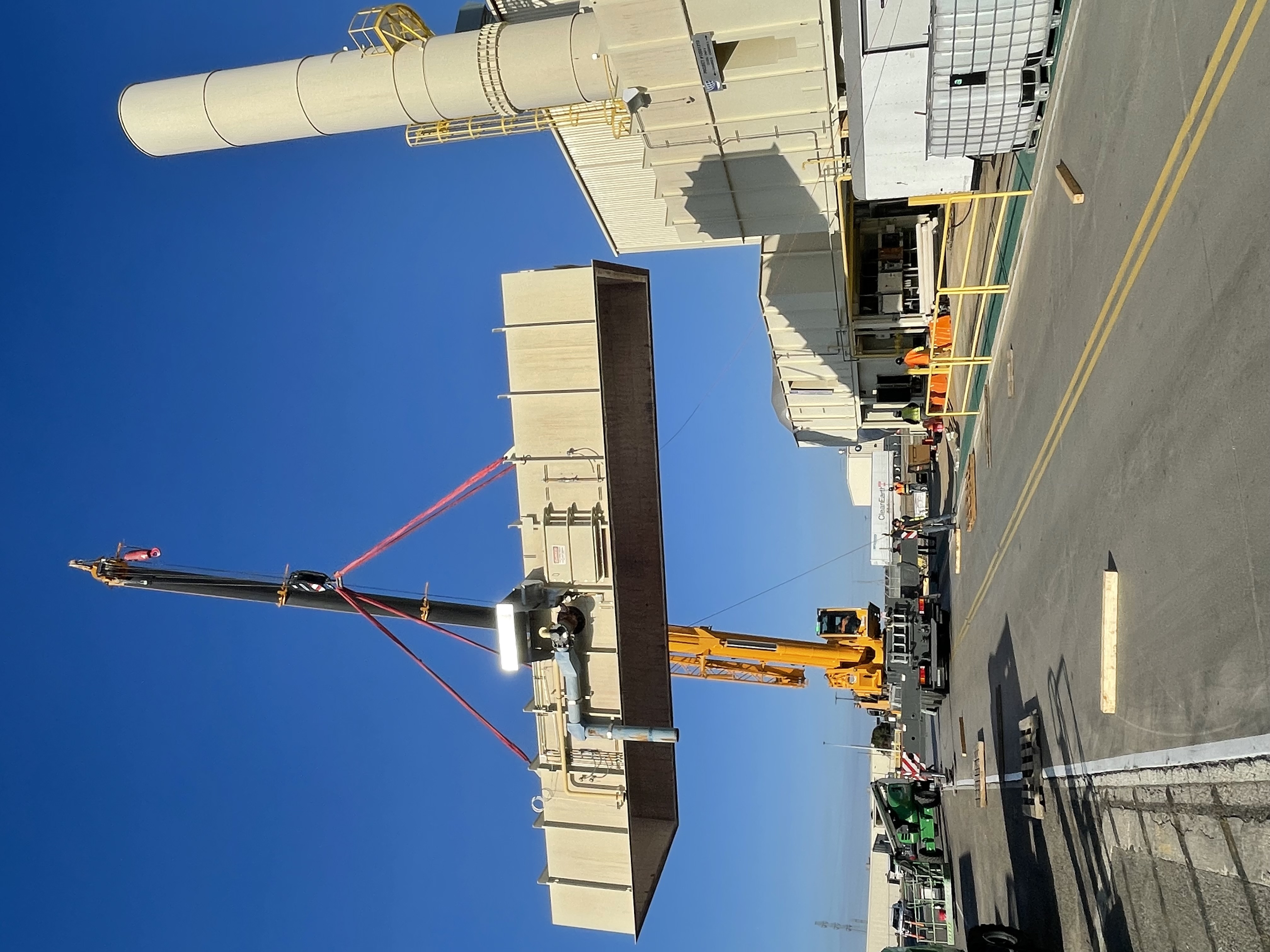
Industrial Oven Insulation Rehabilitation
A critical curing oven was consuming excessive energy with ±10-15°F temperature deviations causing scrap. CleanCap's thermal imaging revealed collapsed ceramic fiber and thinned firebrick. Complete multilayer insulation rehabilitation transformed the failing asset.
25%
Energy Reduction
Restored
Temp Uniformity
Faster
Warm-up Time
Project At A Glance
Challenge
Energy Waste & Quality Issues
Methodology
Advanced infrared diagnostics and heat-loss modeling for root cause identification.
Outcome
- Energy Reduction: 25%
- Temp Uniformity: Restored
- Warm-up Time: Faster
Executive Summary
A leading automotive components manufacturer depended on a high-temperature industrial curing oven. The oven began consuming excessive energy and exhibited temperature variability, leading to increased operating costs and scrap rates. CleanCap's investigation revealed severe deterioration of the insulation system. A complete insulation rehabilitation was executed, resulting in a 25% reduction in energy consumption and restored temperature uniformity.
Customer Background
The customer produces high-precision automotive components requiring tightly controlled thermal curing cycles. Their primary curing oven is a critical asset directly linked to production throughput. Recent issues included elevated fuel use and temperature deviations of ±10-15°F.
Project Background
Earlier attempts to diagnose the problem focused on burners and controls, but symptoms persisted. CleanCap mobilized an engineering team to perform a full thermal system audit using advanced diagnostics and infrared imaging.
The CLEAN Approach
Consult & Analyze
- Thermal Imaging: Hot spots discovered across oven walls and roof panels.
- Internal Inspection: Identified collapsed ceramic fiber blanket and thinned firebrick sections.
- Heat-Loss Modeling: Found 30% increase in heat loss compared to baseline.
- Root Cause: Systemic insulation failure, not mechanical or controls issues.
Learn & Plan
- Insulation Design: Engineered a multi-layer solution with ceramic fiber blanket (primary), insulating firebrick (structural), and aluminum cladding (protective).
- Planning: Detailed installation sequencing to minimize downtime and ensure safety.
Execute with Precision
- Phase 1: Removal of deteriorated materials and surface preparation.
- Phase 2: Installation of ceramic fiber blanket, layered to eliminate thermal bridging.
- Phase 3: Placement of insulating firebrick in high-stress areas.
- Phase 4: Installation of aluminum cladding for protection and heat reflection.
Assess & Document
- Thermal Imaging Validation: All hot spots eliminated.
- Energy Verification: 25% reduction in energy consumption measured.
- Uniformity Testing: Curing cycles stabilized across all zones.
- Documentation: Provided thermal imaging report and material certifications.
Nurture & Maintain
- Provided a maintenance roadmap including annual IR thermography audits and biannual insulation inspections.
Results & Impact
Quantitative Improvements
- 25% energy usage reduction
- Reduced burner firing frequency
- Faster warm-up
Quality Enhancements
- Uniform thermal profile restored
- Significantly reduced scrap
Safety
- Lower external temperatures
- Reduced operator safety concerns
"The project restored a critical thermal asset to engineered performance standards, transforming reliability and reducing operating costs."