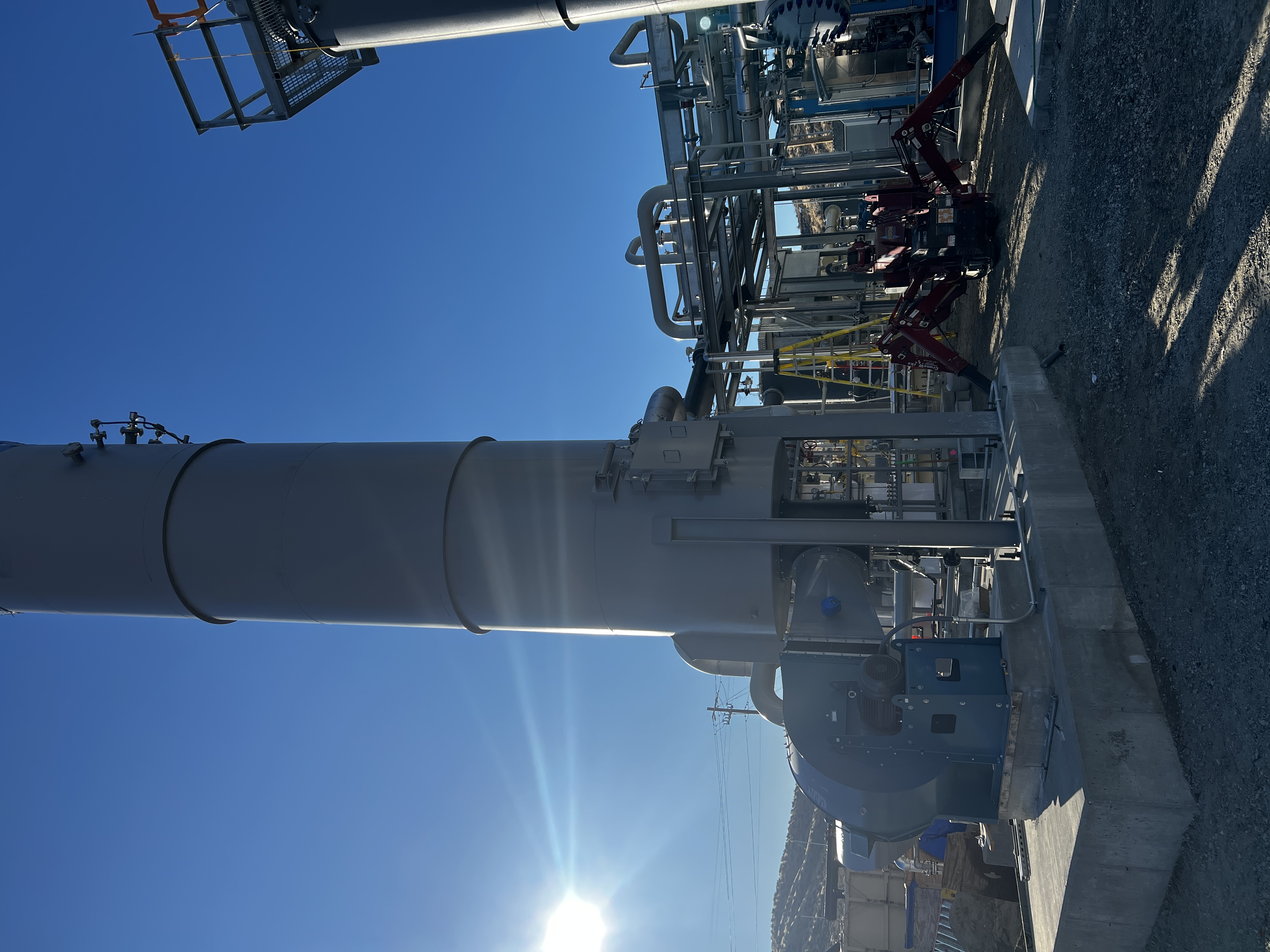
Thermal Oxidizer + Waste Heat Recovery Integration
An RNG facility converting landfill gas needed emissions control without excessive fuel use. CleanCap designed an integrated TO + WHRU system with low pressure drop, capturing exhaust heat for glycol heating while minimizing environmental footprint.
<30 min
Cold Startup
Reduced
Carbon Intensity
Optimized
Heat Recovery
Project At A Glance
Challenge
Fuel Efficiency & Carbon Intensity
Methodology
Full thermal, mechanical, and emissions evaluation for sustainability goals.
Outcome
- Cold Startup: <30 min
- Carbon Intensity: Reduced
- Heat Recovery: Optimized
Executive Summary
A leading Renewable Natural Gas (RNG) developer required a highly efficient emissions control solution for its processing facility. The facility needed a Thermal Oxidizer (TO) capable of destroying contaminants in the permeate stream while minimizing fuel usage. CleanCap engineered an integrated Thermal Oxidizer + Waste Heat Recovery Unit (WHRU) system that achieved major fuel savings, reduced electrical load, and rapid cold startup (<30 minutes).
Customer Background
The customer is a forward-thinking RNG developer converting landfill gas into pipeline-grade Renewable Natural Gas. Their mission emphasizes reducing methane emissions and delivering sustainable, low-carbon fuel alternatives. The facility requires a robust thermal oxidation system to treat VOCs and HAPs from permeate streams.
Project Background
The RNG upgrading process generates a permeate (off-gas) stream requiring thermal treatment. Traditional oxidizers consumed excessive fuel, delivered poor heat integration, and suffered from slow startup times. CleanCap was tasked with designing a holistic emissions and energy-efficiency solution featuring a low pressure drop TO and integrated WHRU.
The CLEAN Approach
Consult & Analyze
- Process & Thermal Load Characterization: Evaluated composition/flow of permeate stream and heat-load variability.
- Energy Utilization Opportunity: Modeling showed large volumes of recoverable energy in TO exhaust with potential to heat glycol loops.
- Mechanical Assessment: Assessed pressure drop impact on blower horsepower.
- Root Cause: The legacy approach used a standard oxidizer design not optimized for fuel minimization or heat recovery.
Learn & Plan
- Low Pressure Drop TO: Engineered features included optimized flow paths and ceramic fiber insulation for high heat retention.
- WHRU Design: Designed to capture exhaust heat for glycol heating, reducing burner fuel demand facility-wide.
- Burner Optimization: High-efficiency, low-NOx burner with modulating controls.
- Skid-Mounted Architecture: Pre-piped, pre-wired design for rapid installation.
Execute with Precision
- Fabrication: Constructed TO with ceramic fiber insulation and high-efficiency burner.
- WHRU Installation: Installed downstream of oxidizer to heat glycol loops.
- Integration: Fully assembled skid-mounted system offsite to minimize field labor.
- Controls: Installed temperature/flow control systems and programmed startup logic.
Assess & Document
- Fuel Savings: Burner duty cycle remained low due to WHRU preheating.
- Pressure Drop: Measured ΔP aligned with aerodynamic modeling.
- Emissions: Achieved required destruction efficiency with lower NOx.
- WHRU Performance: Maintained consistent glycol loop temperatures.
Nurture & Maintain
- CleanCap developed a long-term maintenance plan including annual burner review, WHRU inspection, and carbon-intensity tracking.
Results & Impact
Technical Benefits
- Major reduction in supplemental fuel demand
- Increased thermal stability
- Significant heat recovery
Financial Benefits
- Lower natural gas costs
- Reduced electrical cost
- Lower maintenance downtime
Sustainability
- Lower carbon intensity of RNG product
- Reduced NOx emissions
"The result is a high-performance emissions solution that supports the customer's long-term operational, regulatory, and environmental objectives."